If there’s any polished aluminum on the vehicle, choose Venom + Viper. If you’re washing non-polished surfaces and need a stronger bundle for heavy oxidation and stubborn buildup, choose Bullet + Trigger. The difference is the surface each bundle is designed to clean.
What does “polish safe” mean?
Polish safe refers specifically to polished aluminum. It doesn’t mean chrome, stainless steel, or anything that happens to look shiny. Those are different surfaces, and a cleaner that’s suitable for one isn’t automatically suitable for the others. If you’re unsure whether a part is polished aluminum, contact us before choosing your chemicals.
Compare the two chemical bundles
Venom + Viper Bundle
Polish safe
Venom is Step 1. Viper is Step 2. This bundle is safe for all exterior vehicle surfaces and specifically formulated for use on polished aluminum when used as directed. Venom helps lift grime, road film, and oxidation; Viper targets bugs, grease, and dirt.
If there’s any polished aluminum on the vehicle, choose Venom + Viper. That includes a vehicle with a combination of polished aluminum and other exterior surfaces.
Bullet + Trigger Bundle
Not polish safe
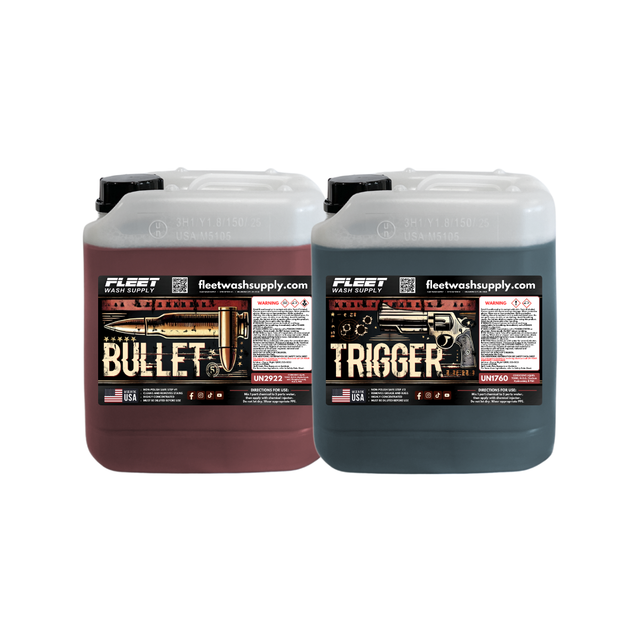
Bullet is Step 1. Trigger is Step 2. This is our stronger bundle for removing heavy oxidation and stubborn buildup. It’s safe on non-polished aluminum, chrome, paint, and stainless steel when used as directed.
Do not use Bullet + Trigger on polished aluminum. A dirty vehicle with polished aluminum still needs the polish-safe bundle; heavier buildup doesn’t change which chemicals are suitable for that surface.
Does the washing process change?
Both bundles use the same sequence: apply Step 1, apply Step 2 directly over it without rinsing between them, brush any areas that need it after Step 2, then rinse thoroughly. Keep the two chemicals in separate containers. Dilute each concentrate separately according to its own instructions before downstreaming; the same process doesn’t mean every product uses the same dilution.
For an explanation of how the two chemicals work together, read What Is Two-Step Truck Washing?
Need help identifying your surfaces?
Contact Fleet Wash Supply with photos of the vehicle and the areas you’re unsure about. Tell us what you wash and what buildup you’re trying to remove so we can help you choose the right bundle.