Bug-heavy mirrors, visors, and bumpers often need more attention than the rest of the truck. We pre-treat those areas with Step 2 in a pump sprayer before two-stepping. That gives the cleaner time to work on the buildup while keeping the extra treatment focused where it’s needed.
What should you pre-treat?
Start with the areas carrying the heaviest bug residue or stubborn grime. Mirrors, visors, front bumpers, and other forward-facing surfaces are common places to check. Pre-treatment is an extra step for problem areas; it doesn’t need to become an extra chemical pass over every clean panel.
Look at what remains from one wash to the next. If the same areas repeatedly need brushing, treating them before the full wash may help loosen that buildup earlier. You may still need to brush, especially on a vehicle that hasn’t been washed regularly.
Which chemical should you use?
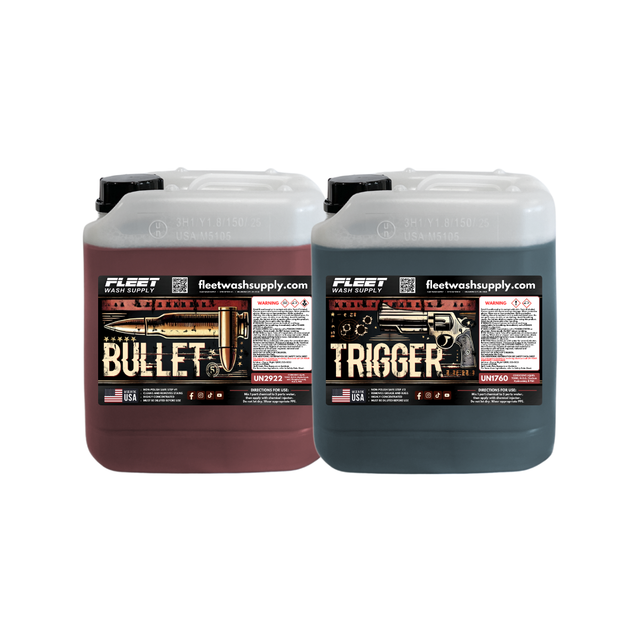
Use the Step 2 product appropriate for the vehicle. If there’s any polished aluminum on it, choose Viper with the Venom + Viper bundle. Trigger is the Step 2 product in our Bullet + Trigger bundle, which is not polish safe. Pre-treating doesn’t change which chemicals are suitable for the surfaces you’re washing.
Our chemical bundle guide explains that choice. You can also shop the Venom + Viper and Bullet + Trigger bundles.
Mix for the pump sprayer
A pump sprayer applies the mix from its container directly; it doesn’t add pressure-washer water through a downstream injector. Use the pump-sprayer dilution for your product rather than assuming the RTU you prepare for downstreaming is the right strength for direct application.
For Trigger, we recommend starting at 25:1 water to concentrate for pump-sprayer application. If you’re using Viper and need help establishing the pump-sprayer mix for your surfaces, contact us. Keep the product identified on its container so your crew can distinguish the pre-treatment mix from the downstream RTU.
Where does pre-treatment fit in the wash?
Pre-treat the problem areas, then carry out the normal two-step wash: apply Step 1, apply Step 2 directly over it, brush any areas that need it after Step 2, then rinse thoroughly. Pre-treating with Step 2 first does not replace the Step 2 application in the full wash.
Plan the work so the pre-treatment and wash chemicals stay wet until rinsed. Dwell time follows the product instructions; leaving a product on until it dries isn’t a way to get extra cleaning. Work in sections you can finish through the rinse.
What if the bugs still need brushing?
After applying Step 2, brush the areas that still need agitation, then rinse. Use our brushing guide for where that fits in the process. If the same residue persists despite a suitable product and correct application, send us photos and your mixing details before repeatedly strengthening the chemical.
Watch our touchless truck-washing discussion. You’ll find more demonstrations in our video gallery.