If a truck is still dirty after a two-step wash, don’t assume the chemicals need to be stronger. The RTU (ready-to-use mix) in your containers, the injector, the application sequence, and the condition of the vehicle all affect the result. Work through the setup before changing products so you can identify what actually needs attention.
Are both chemicals reaching the truck?
Start by checking that Step 1 and Step 2 are both being drawn when selected. Make sure the correct chemical is connected to each pickup line and that the pickup ends are submerged. Look for kinked tubing, visible damage, or an obstructed pickup strainer.
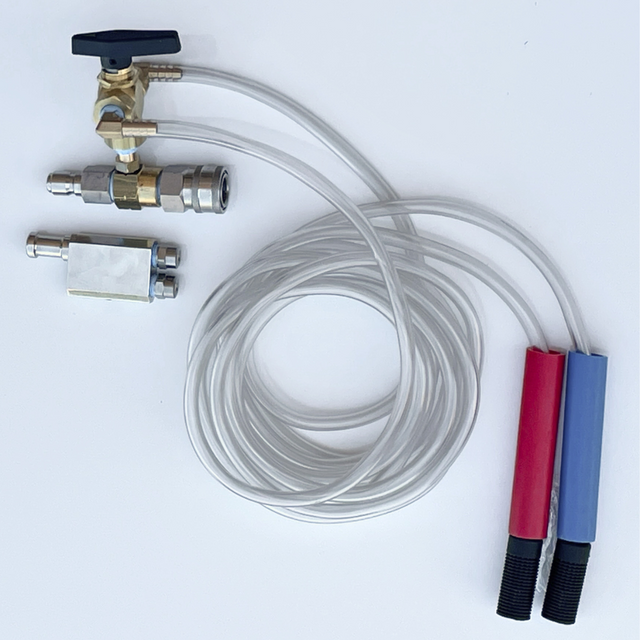
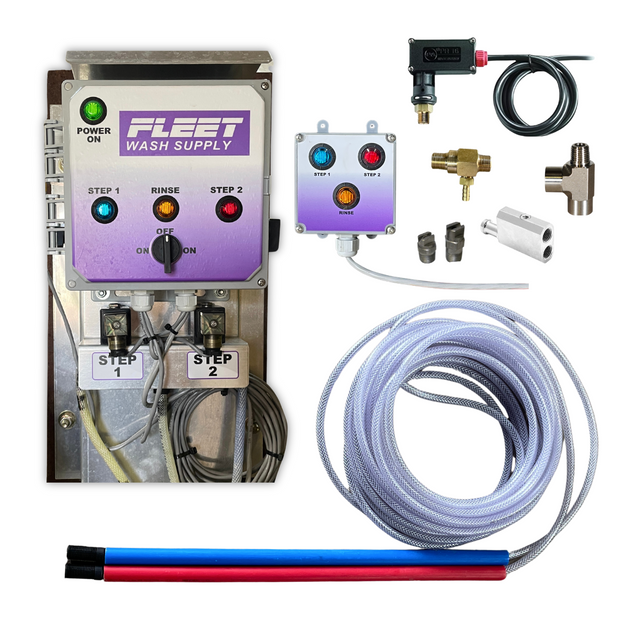
On a conventional low-pressure downstream setup, the nozzle and soap setting affect whether the injector draws. An incorrect nozzle, a blocked chemical line, excessive discharge-hose length, or an air leak can interfere with pickup. Use the components and settings specified for your equipment. Stop and depressurize the system according to its instructions before servicing or disconnecting components.
If the problem started after changing a hose, nozzle, injector, or fitting, include that change when you contact us. A pressure washer spraying water normally doesn’t confirm that it’s also pulling chemical correctly.
Was each concentrate diluted correctly?
Check the measured water and concentrate amounts in both containers. Don’t assume the two steps use the same ratio, and don’t estimate from how dark or foamy the mix looks. Our dilution guide explains the ratios and includes a calculator for your RTU batch size.
Remember that RTU is diluted again during downstreaming, producing the final dilution that comes out of the wand and hits the truck’s surface. If chemical delivery has changed, changing the container mix alone may leave the underlying equipment problem unresolved. Check the injector draw and the product instructions before adjusting strength.
Are you following Step 1, Step 2, then rinse?
Apply Step 1 first, then apply Step 2 directly over it without rinsing between them. After Step 2, brush any areas that need it, then rinse thoroughly. Keep the chemicals in separate containers and make sure you’re applying each one across the area being washed.
When switching chemicals, allow the product already in the line to clear before applying the newly selected chemical. This typically takes about 10 seconds on our setups; the time can vary with your hose length and system. Make sure the selected chemical has reached the end of the wand before applying that step to the truck.
Is chemical drying before you finish?
Do not let the wash chemicals dry on the vehicle. Work in areas you can complete through both steps and the rinse while the chemicals remain wet, and follow the product’s dwell time instructions. If an area is drying before you finish, adjust the size of the area you’re working on rather than leaving the product longer.
Rinse thoroughly so loosened dirt and chemical residue are removed. If you’re unsure whether what remains is dirt, residue, oxidation, or a problem with the finish, send us photos before repeatedly applying more chemical.
Does the remaining buildup need brushing?
Two-stepping reduces brushing, but it doesn’t make every wash touchless. Neglected surfaces, heavy buildup, and certain problem areas may still need a brush and extra attention. Brush the areas that need it after applying Step 2 and before rinsing. A vehicle that’s cleaned regularly can be a different job from one being washed after months of buildup.
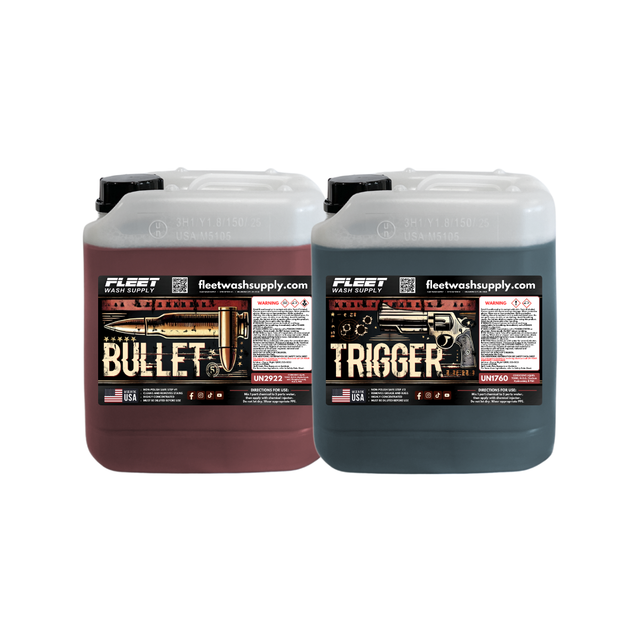
Also check that the chemical bundle suits the vehicle. If there’s any polished aluminum on it, choose Venom + Viper. Do not switch to Bullet + Trigger on polished aluminum to try to remove stubborn dirt. Our chemical bundle guide explains the difference.
What should you send us for troubleshooting?
Contact Fleet Wash Supply with photos of the areas that aren’t coming clean, the chemical names, your measured container mixes, the pressure washer’s GPM and PSI, and the injector or system you’re using. Include your hose length, nozzle details, and anything that changed before the problem started. A short video showing the setup and chemical switching is helpful too.
For a refresher on the process, read What Is Two-Step Truck Washing? or visit our video gallery.